
By Rachel Bithell
Neuroscientists, child development experts and our own instincts tell us babies and kids crave connection with adults and need safe, reliable relationships with caregivers to thrive.
As resource parents, we want to fill this need. However, often the children in our homes need extra time and support to feel safe trusting us.
If children’s past experiences of abuse or neglect taught them adults will hurt them, they may be avoidant or aggressive toward adults. Some children may have behaviors that seem manipulative.
These behaviors can be a child’s way of trying to maintain control. Alternatively, inconsistent caregiving might have taught them to exploit today’s positive attention because they couldn’t be sure caregivers would be emotionally or physically present tomorrow.
Confusion about when and if to trust caregivers may also cause children to cling to you one minute and push you away the next.
Additionally, some children believe the only person they can rely on is themselves and resist all caregiving.
Other kids may see forming an attachment with a foster, adoptive or kinship caregiver as a betrayal of their family of origin. If you face any of these challenges, the following strategies may help you build bridges with the children in your care.
Play Together
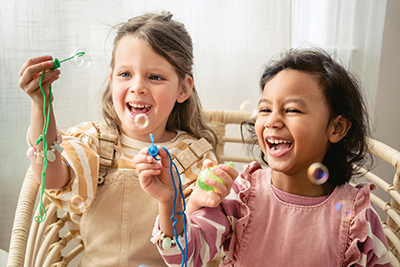
Kids feel safer and learn faster when they are having fun. Parentified kids get a break from “being the grown-up” when they are engaged in play. Play can look different at different stages, but even adolescents need to play.
At any age, choose activities that are fun, shared and relatively unstructured. Avoid games or activities that are competitive, have winners or losers, or have right and wrong ways to play. Just have fun doing child-led activities together.
If a child tries to play inappropriately, don’t punish him. Instead, redirect him to a new activity or way to play.
For example, a kid who breaks her toy trucks by smashing them together might be redirected to build a track or ramp for just one truck. The next page has suggestions for open-ended play for kids of all ages.
Find Things to Laugh About
My son has a thick book of kids’ jokes. Many of them are groan-worthy, but somehow when he tells them, they make me laugh. Maybe you can enjoy videos of funny pets or laughing babies together or watch clips of a family-friendly stand-up comedian.
One boy I cared for loved a graphic novel series full of puns and fart jokes. Find what works for your child and try to laugh together every day.
Do Chores Together
Chores have many benefits for children. They teach them valuable self-care skills, help them feel capable and show they are an important, contributing member of the family. But many chores are best done together.
Let kids help plan menus and prepare foods they like. Put some music on and clean up toys, put away dishes or fold laundry with your child.
Caring for a pet together can be a powerful way to teach nurturing and empathy. Even tooth brushing can be a shared experience.
Try to Say Yes
Most resource parents will find themselves saying “no” frequently as they try to maintain safe and healthy boundaries. So look for ways to say “yes.” Your kids need to know you are on their side, and saying yes helps send that message.
Especially try to say yes to anything that gives you a chance to be with your child.
Since becoming a resource parent, I have said yes to more messy art, craft and cooking projects; walks; scooter and bike rides; trips to the playground; and bedroom decor, hairstyles and outfits that I wouldn’t have chosen but my child liked.
When you need to say “no,” try to make it sound more like “yes.” For example, my son sometimes decides he wants to go to the roller rink or swimming pool about 10 minutes before we need to leave for school.
I usually respond by saying something like, “That sounds really fun! Let’s look at the calendar right after school and find a time to do that soon.”
Meet Your Child Where They Are
One 5-year-old we cared for had to leave his family while they were celebrating his sister’s birthday. He described the experience as being “kidnapped by the police.”
As resource parents, we may be excited to welcome kids to our homes, but they are likely overwhelmed with fear and grief.
A trip to a water park or playland may seem like a fun outing to you, but could be way too much stimulation for your child. Try to keep plans low-key and predictable.
Don’t expect your child to care about the things you like, at least not initially. Instead, be interested in your child’s interests. One resource mom in a class I facilitated welcomed a preteen boy to her home. She described him as sad, passive and withdrawn, with no interest in anything besides video games.
She didn’t like video games, but she loved her child, so she used video games as a way to have shared experiences.
She felt the violent game that was his favorite wasn’t age appropriate, so she bought a couple of multiplayer, platforming games for him. As they played together, he had opportunities to be an expert and teach her tricks and strategies. They celebrated high scores and finishing levels together.
She learned to use the jargon he used and they developed a few inside jokes. After several weeks, he started voluntarily joining her in other activities, like riding along on errands and making dinner.
Give Grace and Be Patient
Whatever challenges you face connecting with the kids in your care, know your efforts aren’t wasted.
Children want to feel safe and loved. But trust has to come first, and that takes time, patience and consistency. When things are hard, practice forgiveness for yourself and your child and keep trying.
Below are suggestions for open-ended, child-led play. While they are divided roughly by age, remember that many children’s developmental stage doesn’t match their chronological age. Additionally, older kids who missed out on some kinds of play as young children may still benefit from those activities.
Infants and Toddlers
- Play Pat-a-Cake, So-Big and other simple action games.
- Make music with toys like tambourines and shakers.
- Sing nursery rhymes and other short songs.
- Look for objects hidden under blankets or bowls.
- Build with or string blocks.
- Roll a ball back and forth or at a target.
- Fill a container with blocks or balls and dump it out.
- Play simple pretend games with dress-up clothes, dolls and/or stuffies.
- Blow bubbles.
- Read books together.
Preschool Through Preteen Children
- Play with Play-Doh, kinetic sand, clay, salt dough, slime, shaving cream or fingerpaint.
- Fill a large baking dish with dry beans or rice and hide small objects for your child to find.
- Turn on some music and have a dance party.
- Play games such as hide-and-seek or hot-and-cold.
- Engage in gross motor play such as jumping rope, swinging, roller skating, hula-hooping, frisbee or trampolining.
- Ride bikes, trikes, scooters, hoverboards or pogo sticks.
- Make a blanket fort.
- Build with blocks, cardboard or Legos.
- Play with water; use balloons, buckets, spray bottles, wading pools or sprinklers.
- Make art with sidewalk chalk, paint or torn-paper mosaics.
- Create an obstacle course out of boxes, chairs, buckets, Hula-Hoops or whatever you have.
- Play pretend games with dress-up clothes, dolls, action figures and/or stuffies.
- Play charades or Pictionary (with no winners, just take turns guessing).
- Make a track for a toy car or run for marbles out of empty paper towel tubes.
- Zigzag yarn across a hallway or small room and try to crawl through without touching any.
- Line up dominoes, then knock them down.
- Try keeping a balloon in the air as long as possible.
- Complete a puzzle.
- Blow bubbles.
- Read books together.
Adolescents
- Build something such as a model, Lego set or woodworking project.
- Repaint your teen’s room together in a color of their choice.
- Volunteer together at a trail cleanup, food pantry or animal shelter.
- Assemble a jigsaw puzzle.
- Play sports such as frisbee, basketball or tennis in non-competitive ways. For example, see how many times you can volley a ball instead of keeping score.
- Take a class together related to your child’s interests — anything from art or fitness to cooking and coding.
- Create a video or podcast that explores your child’s interests.
- Draw portraits of each other.
- Give each other manicures or pedicures.
Rachel Bithell is a teacher, author and mother to six children, two of whom were adopted from foster care. As a licensed foster parent for six years, she also taught trauma-informed parenting classes for prospective and current resource parents. To find more of her writing or connect with her, visit rachelbithell.com.