
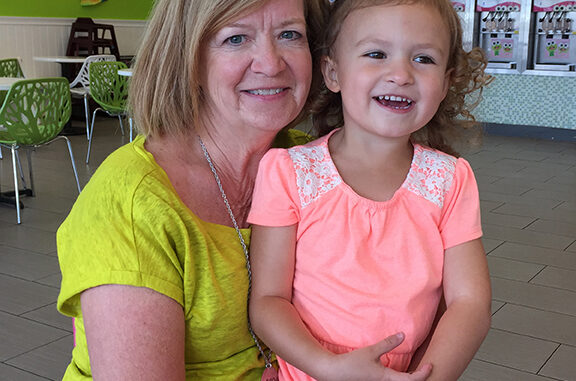
A Foster/Adoptive Grandmother Shares How to Support Family When They Decide to Foster
By Rhonda Wagner
It was right after Thanksgiving dinner in 2015 when our daughter, Lisa, and son-in-law, JJ, shared their intentions to become a foster family. A bit taken back by the news, I savored a bite of pumpkin pie before responding, “Really? Tell us more.” They had contacted a local agency and were scheduled to begin training classes soon. I’ll admit I was afraid of their decision. My immediate concerns were for their daughter, Avery, my nearly 4-year-old granddaughter. “Wouldn’t the coming and going of children who became like siblings be too hard on her little heart? And, what about my heart?”
I looked for children’s books about foster care, envisioning myself reading to Avery with both of us learning how our family’s dynamics were about to change. But I only found books written to help children in foster care.
Nothing was written specifically for the biological child in a foster family. It was hard for me to grasp that while parents needed to complete multiple training sessions before becoming licensed to foster, their children would step into a nontypical sibling role blindly. I started following people connected to foster care on social media. Jamie Finn (@fosterthefamilyblog) and Jami Kaeb (@theforgotteninitiative) were, and still are, two of my favorites.
By reading their posts and comments from other readers, and listening to their podcasts, I quickly realized how well this community supported one another in serving vulnerable children.
It was not an easy path that Lisa and JJ were choosing, but it was one I would fully support as I considered how to help. An important first step for me was to be background checked so I could babysit the child. Once cleared, I anxiously waited to hear of the first child they welcomed home. It was a weird kind of wait knowing a child’s hard place needed to be brought to light before their phone would ring. Then one cold, snowy day in March 2016, they got “the call.”
A caseworker carried a scared, wide-eyed 18-month-old little boy into their home. Taking their newfound role as foster parents quite seriously, I was never asked to babysit during his short stay. He was reunified with his biological father in just two months.
While I know my kids struggled with his departure, and I selfishly wished he’d stay a bit longer, Avery seemed OK not having to share her toys or parents anymore. Still, I wondered about the impact.
Weeks later, a second call had Lisa and JJ saying “yes” to a 2-day-old infant they brought home from the hospital on Lisa’s birthday. Since they were licensed “foster to adopt,” I just knew his arrival on her birthday was a “divine sign” that he would become adoptable. That’s how naive I was in my new role as foster grandma. Avery adapted well to a newborn, cuddling him every chance she got. We all did. When he was moved to a kinship family, we all experienced the hurt of a hard goodbye. My hard was triple-layered as I hurt for my granddaughter’s pain, my kids’ pain and my own personal pain of loss.
I quickly learned that if I was to be much help to my kids in their mission, I needed to buckle up my “big-girl pants.” Loving came easily. Letting go, not so much.
The third child, another newborn, arrived in December that year. Born with a severe bilateral cleft lip and palate, the baby boy struggled with feedings and gaining weight.
Appointments with feeding teams, surgeons and specialists filled my daughter’s days. In prepping for surgery, Lisa was trained on how to insert and secure a custom-made mouthpiece with facial tapes. The baby’s incessant fussing with this molding was trying. I was amazed how well Lisa and JJ sacrificed themselves to meet this baby’s chronic needs.
My help was needed. With an overnight bag packed for my weekly three-day stay, Avery waited at the door for my arrival. “Nana, do you want to play Barbies?” Routinely, I’d toss in a load of clothes, grab several baskets of clean laundry to fold and play the part of Ken. Avery was learning this baby brother didn’t cuddle easily and took much of her parents’ time.
Months into his stay, bio kin started attending his doctors’ appointments with Lisa. The couple held the baby, listened to medical professionals and learned of his present and future surgical needs. Our family tried to “ready our hearts” for his departure, until Lisa received an unexpected email from them. They were withdrawing their home study and extending their blessing if the baby became adoptable. Our hearts could breathe again. In May 2019, with two surgeries under his belt, a thriving toddler was adopted into our family. His name officially changed to Rhodes that day and I was promoted to foster/adoptive grandma. While I knew adoption doesn’t happen without prior brokenness, it was love and joy that filled our hearts that day.
The highs. The lows. The joys. The sorrows.
Anyone touched by foster care knows this rollercoaster of emotions. They are on repeat often. And, a lot to process. I was glad my kids had found a community of other foster families to share their journeys together. My role was clearly to love unconditionally, and offer support “as needed.”
And I definitely felt needed when, three months later, two newborns were welcomed into Lisa and JJ’s home. I called them the “kinda, sorta twins.” Baby girl was one week older than baby boy. Double everything was gathered for twinning. Mounds of laundry grew into mountains. I still played Barbies but mostly one-handed with a baby in the opposite arm.
Then one day, quite unexpectedly, the babies were separated when baby girl was placed with kin. Sigh… details of this case brought an extra layer of hard feelings with her departure. The following day I met Lisa, Avery, Rhodes and baby boy at an outdoor pumpkin patch farm to start our healing. A beautiful autumn day, Lisa pushed through the pain while jumping on the giant pillow trampoline with her two older kids. We strolled from one attraction to another sharing laughter with aching hearts as the kids zip-lined on the Bat Glide and buried each other in corn at Corncob Beach.
In March 2020, the boy-half of “the twins,” Bowen, was adopted into our family. He was a bio sibling of Rhodes, which made his adoption even more special. These brothers would grow up together in their adoptive family. My heart was glad.
Yes, foster care changes your heart. You might enter with a selfish heart as many do — with a savior’s mentality believing you can rescue every child in your care. But, our safe space should lead that child back to their family if possible. In time, you’ll learn to root for the parents who have made poor decisions in the past. You’ll cheer for healthy kin placements. And your heart will smile through its own pain to know you helped restore families.
I’ve seen my daughter’s genuine smile in a “letting go” photo taken with a child’s grandma in a parking lot where they met for the kinship transfer. And, I’ve been there when Lisa made a phone call to a child’s aunt and grandma who were frantic “to get him out of foster care,” having just learned of his Grayson’s birth when he was nearly 2 years old. Grayson had been welcomed into Lisa and JJ’s family as an infant a year after Bowen’s adoption. During the call, Lisa explained he was safe and loved having been part of their family for most of his life. She texted pictures to comfort them and invited them over to meet Grayson and their family. After the visit, these relatives lovingly “let go” in Grayson’s best interest. They attended his adoption day and brought gifts to celebrate. They are welcome to be a part of his life. No one can have too many people who love them.
After three adoptions, Lisa and JJ closed their home but not their lives to foster care. Lisa now heads up a local nonprofit — Hope Bridge (@hopebridgeohio) — serving single moms, foster families and youth exiting foster care into independent adulthood. A construction business owner, JJ continues to serve in this space and live out this ministry by donating his time and talents to Hope Bridge events and initiatives. And, as a foster/adoptive grandmother, I have written a series of children’s books to serve biological kids in foster families, called “The Joy of Avery.” It’s like their own set of training manuals to help prepare them for their new role as a foster sibling. It’s what I was looking for nearly 10 years ago. Now as a foster/adoptive grandma, I look for children’s books explaining adoption.
While Lisa and JJ will answer my grandsons’ questions first as they grow, I want to be ready too. I’m following youth online whose foster care stories include adoption. A favorite author for this topic is Trisha White Priebe (@trishawhitepriebe). So, I’m back to reading, learning and preparing for the time a grandson might initiate a heart-to-heart conversation with me. I’ve heard it said, “You don’t have to be licensed in foster care to do foster care.” So true. In my connected role, I’ve been “doing foster care” for nearly a decade with no end in sight. You may be part of a foster or kinship family right now. Maybe you are in for life. If so, major kudos to you.
Maybe you’re in for a year, or five or even 10, but then step away. It’s OK to close your home, but please don’t close your life to foster care. Stay in a supportive role. You know what encouragement and help from others meant to you. Return the favor. Foster care will change your life and the lives around you. Let it change your heart, too. •
10 Tips From a Foster Grandma When Your Adult Children Step into Foster Care
- Get background checked so you can offer to babysit.
- Learn as much as you can about foster care by reading and listening to stories of those who are already fostering. Vow to “get it.”
- Read “The Joy of Avery” series of books to your bio grandchildren to help them better understand their role in a foster family.
- Offer help with transportation needs of your biological grandchildren.
- Be a playmate to your family’s biological and foster kiddos, never showing favoritism.
- Help with the seemingly never-ending task of laundry.
- Be available “as needed,” especially to help pick up the pieces after a hard goodbye.
- Be an encourager throughout the journey. Bring a meal, a coffee, a dessert, a gift card, love and a prayer.
- Choose to love a child’s bio family and welcome safe members into your family post-adoption.
- Stay connected to foster care even if your children close their license. Find a foster family and/or a local nonprofit to support by volunteering your time, talents and/or donations.
Rhonda Wagner is a foster/adoptive grandmother and author of “The Joy of Avery” series of faith-based children’s books written to serve biological/forever children in foster families. “It’s Okay to Wonder”, “Braver Than Me”, “Say YES Again” and “The Best Answer” are book titles in the series. Books are available online at Amazon and most online book stores. Follow along on the Instagram handle
@rhondawagnerbook and learn more at www.thejoyofaveryseries.com. Wagner and her husband, Dan, reside in western Pennsylvania and are passionate about giving their very best love, prayers and support to their children and grandchildren, now and forever.